
Loneliness After Moving Cities or Towns: Why It Can Feel Harder Than You Expected
Moving can look exciting from the outside, but still feel lonely and disorientating. This post explores why loneliness after moving cities or towns can run deeper than just “not knowing people yet” - touching on grief, belonging, identity, and the losses that come with starting over. If you’ve been feeling unsettled, disconnected, or less like yourself since a move, this piece offers a gentle reflection of why that can happen and how therapy might help.
Lua Bruckhoff
4/14/20266 min read

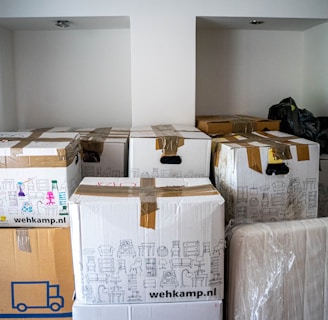
Loneliness After Moving Cities or Towns: Why It Can Feel Harder Than You Expected
People tend to talk about moving as though it’s an exciting fresh start.
A new suburb. A new city or town. New routines, new social connections, opportunity, a different pace, a version of life that might feel better than the one you left.
But what often gets missed is how lonely that move can be, especially in the early stages.
Even when it was your choice. Even when it was the right decision. Even when you were deeply ready to leave. And sometimes, it’s exactly for those reasons that we can find it difficult to say we’re struggling with loneliness.
For many people, moving doesn’t just involve boxes, paperwork, and learning new streets. It can also bring a subtle kind of loss. The loss of familiarity. The loss of being known. The loss of routines that held you more than you realised. Sometimes it can leave you feeling unsteady in ways that are hard to explain to other people.
You might look fine on the outside. You might even be getting on with work, study, or daily life. But underneath that, something can feel off. You may notice a heaviness at the end of the day, a sense of distance from yourself, or a low ache that sounds something like, I thought this would feel different by now.
If that’s where you are, this post is for you.
Loneliness after moving is not a sign that you made the wrong decision. Often, it’s a very human response to change.
When moving brings up more than logistics
Relocating can stir much more than logistics or practical next steps.
It can bring up questions about who you are when you’re no longer surrounded by the places, people, or cultural cues that once helped shape your day-to-day life. It can make identity feel less settled. It can bring up grief, even when nothing has gone “wrong.” It can make old patterns more noticeable, especially if you’re already someone who tends to over-function, self-contain, or adapt quickly for other people.
Sometimes the loneliness of moving is not just about being alone in a new environment.
Sometimes it’s about not yet feeling connected to place and people in your new environment.
Not yet feeling known.
Not yet feeling safe enough to fully arrive.
For people who are queer, bicultural, migrants, or used to moving between different worlds, this can feel even more layered. A move can reactivate old experiences of being the outsider, having to translate yourself, or trying to work out where you belong. It can bring back parts of identity fatigue you thought you had already worked through.
This is part of why loneliness after moving can feel surprisingly intense. It often touches more than your social life. It can touch belonging, self-trust, and the parts of you that long to exhale somewhere and feel at home.
Why loneliness can feel more intense after the initial settling-in period
In the early stages of a move, there is often a lot to do.
You’re organising practical things. You’re learning about the area. You’re working out where to shop for groceries, how to get around, where the light falls in your new room, how the days move here.
That busyness and activity can hold you for a while.
Then, often a little later, the emotional reality catches up.
You realise there is no one to message about something small. No familiar face at the local library. No one who already knows your history. No easy smiles of recognition. No effortless place to land.
This can be especially difficult for thoughtful, high-functioning people. From the outside, it may seem as though you’re coping well. You’ve made the move. You’re handling things. You’re still showing up. But internally, you may feel tired, flat, detached, or unsure why everything is taking more effort than it “should.”
Perhaps you’ve tried to reach out to loved ones back home, only to be met with un-read messages, difficulty aligning time zones for video calls, or dismissive comments that encourage you to focus ‘on the positives’.
Sometimes what people call loneliness is also grief. And sometimes it is the exhaustion of constant adaptation.
The quiet grief that can come with starting over
We don’t always speak openly about the grief that can come with relocation.
You can miss a version of yourself who existed somewhere else.
You can miss who you were around certain people.
You can miss how easy some things once felt.
You can miss the ordinary intimacy of being familiar with your surroundings.
Even a move you wanted can involve loss.
This kind of grief can be hard to articulate because it doesn’t always look obvious. It may show up as irritability, numbness, trouble settling, second-guessing yourself, or feeling disconnected in relationships. You may find yourself withdrawing, or wondering why it feels harder to let people in.
For some people, moving also exposes how much they’ve been relying on productivity or busyness to stay afloat. Once the structure changes, the loneliness becomes easier to feel.
That doesn’t mean that moving was the wrong decision or that the move has been ‘unsuccessful’. It might simply mean your inner world is asking for attention, too.
If making friends feels harder than it “should”
A lot of people blame themselves here.
They tell themselves they should be trying harder. They should be putting themselves out there more. They should be more grateful. More social. Less sensitive.
But making connections in a new place can be genuinely hard, especially when you’re already carrying stress, anxiety, or the emotional impact of a major change.
And not everyone is looking for more people in the abstract. Many people are looking for resonance. For steadiness. For relationships where they don’t have to over-explain themselves. For a sense of ease that can’t be forced.
If you are someone who has often felt different, misunderstood, or between worlds, new environments can amplify that tenderness. The task is not only meeting people. It is working out where you can soften.
That takes time.
Therapy can be a place to arrive while the rest is still taking shape
When you move, so much can feel unfamiliar all at once.
Therapy can offer a place that does not ask you to perform or to be settled before you are.
It can be a space to talk honestly about loneliness without reducing it to a social problem to solve. It can help make sense of what the move has stirred emotionally, relationally, and physically. It can support you to notice the patterns that become louder when you feel untethered, whether that’s self-criticism, withdrawal, people-pleasing, overworking, or difficulty trusting connection.
It can also be a place to explore belonging in a deeper sense.
Not just, How do I make friends as an adult in a new city?
But also, What helps me feel safe enough to be myself here?
What parts of me feel more visible or more hidden in this place?
What am I grieving, and what am I still growing into?
That kind of work matters, especially if you are carrying identity stress, minority stress, cultural displacement, or the quiet exhaustion of always adapting to new environments and social expectations.
You do not need to wait until things get worse
Sometimes people think they need to be in crisis before therapy is warranted. They wonder whether things are ‘bad enough’ to contact a therapist. But often, it’s the subtle every-day warning signs that tell us that therapy might be helpful. You might still be functioning okay. You might still be working, studying, caring for others, replying to messages, getting through the week. But underneath that, you might feel less like yourself, a bit less connected, like you’re moving through your days on autopilot, more alone than you expected.
You do not need to prove that the move has been hard 'enough'.
You do not need the perfect reason why things feel ‘off’.
You do not need to have the right words to describe how you feel, before you reach out.
Sometimes therapy starts with something as simple as, “I moved, and I haven’t really felt at home since then - or ever”.
A gentle next step
If you’ve recently moved and you’re feeling lonely, emotionally displaced, or unsure why the transition has felt heavier than expected, therapy can offer a place to slow down and make sense of it.
At Calm Centre Therapy, I offer trauma-informed, LGBTQIA+ affirming therapy for adults in Footscray, Melbourne, and online across Australia. My work is often a good fit for people navigating identity, belonging, burnout, grief, relationship stress, and life transitions, especially when what they’re carrying is hard to name but no less real.
You’re welcome to explore Individual Therapy, Identity and Belonging, or Queer Affirming Therapy, or get in touch if you’d like to see whether working together feels like the right fit.


Lua Bruckhoff (She/Her)| Accredited Mental Health Social Worker
admin@calmcentretherapy.com.au
Calm Centre Therapy is situated on Wurundjeri land which was never ceded and will always be Aboriginal Land. I acknowledge the ongoing connection the Wurundjeri people of the Kulin Nation to land, waterways and community and I extend my respect and acknowledgement to Elders past and present.