
Therapy for Burnout in Melbourne |Naarm
Burnout is what happens when stress builds up for too long and your system starts to feel exhausted, emotionally, physically, and mentally. You might notice it showing up as feeling flat, overwhelmed, detached, or not able to find enjoyment in the way you used to. People often link burnout to work-related stress, but it can show up when life asks too much of you in general and for too long. This might be the case if you tend to carry the emotional load in your relationships.
The thing about burnout is that it tends to unfold slowly and isn't obvious right away. You might notice a persistent fatigue to start with, and slowly lose interest or capacity to engage in activities that you used to enjoy. You might find yourself trying to 'save time' by letting go of basic self care activities, such as exercising or getting enough sleep.
From the outside, life might still look relatively stable. You might still be working, meeting responsibilities, and showing up for people around you. But internally, you might start to notice yourself feeling numb, detached and overwhelmed- making it difficult to be present in your personal relationships, work, and life in general.
What Burnout can feel like
Burnout can show up in different ways, including:
• constant fatigue or feeling like your limbs are too heavy
• difficulty concentrating or feeling mentally 'foggy'
• feeling emotionally numb or detached from yourself and/or others
• irritability or feeling overwhelmed even by the smallest things
• loss of motivation or sense direction, feeling "lost"
• feeling disconnected from purpose or meaning
For some people, burnout develops gradually after long periods of navigating social or cultural expectations and identity stress.
How therapy can support burnout recovery
Burnout recovery isn't about pushing yourself harder so that you can become more productive. It often starts with slowing down, reconnecting with what truly matters to you and mapping out a way towards recovery that is going to look different for different people and circumstances.
Therapy can offer a supportive space to explore:
• what has been contributing to the pressure you’ve been carrying
• patterns of responsibility, perfectionism, or over-functioning
• the emotional context around your exhaustion
• ways of reconnecting with parts of yourself that have been pushed aside
• rebuilding energy, motivation and meaning
Sometimes burnout also sits alongside experiences such as grief, identity questioning, relationship stress, or long-standing patterns of self-criticism.
Exploring these layers can help make sense of what your exhaustion may be trying to communicate.
If this sounds like a space that would be supportive for you, you are welcome to get in touch with me to explore working together in therapy.

My Approach to Therapy
My approach is collaborative, relational, and trauma-informed.
Many of the people I work with are thoughtful individuals who have spent years adapting to different environments and expectations, often shifting or hiding a part of their identity.
For some, this includes navigating experiences such as:
• queer identity or questioning
• cultural identity, migration and adjustment stress
• family expectations
• relationship stresses and life transitions
• periods of anxiety, burnout or 'feeling lost'
Therapy offers a space where these layers can be explored with care. The first session is often a time to get to know you, map out your therapy goals together, and work out a plan to move towards these. I know that finding the right therapist is an important step, so I offer free 15min connection calls where we can answer any questions and get a sense of what working together might feel like. You are welcome to use the contact button below to get in touch with me
Frequently Asked Questions
Is Burnout the same as Anxiety or Depression?
Burnout can definitely feel similar to anxiety or depression, but it isn’t the same thing.
Some people experience burnout as feeling like they are constantly on edge, tense, irritable over things that never used to annoy them, with a persistent sense of not being able to 'switch off'. Other people experience burnout like 'shutting down' or feeling unmotivated, emotionally exhausted and unable to engage in activities they used to enjoy.
Burnout can overlap with anxiety, depression, grief, trauma responses, or chronic stress. In therapy, we can gently make sense of what you’re experiencing, what may have contributed to it, and what kind of support might be helpful, without needing to force it into any one label.
At Calm Centre Therapy in Footscray, sessions are $185 per appointment.
How many sessions you’ll need depends on what you’re hoping for from therapy, what has been contributing to burnout, and the pace that feels sustainable for you. Some people come for a shorter period to focus on a specific concern. Others choose longer-term therapy to explore deeper patterns around stress, identity, relationships, or self-worth. In our first session we can talk about this together and come up with a plan that meets your unique needs.
How much does Therapy cost and how many sessions will I need?
Do you offer Medicare Rebates or take Insurance?
Medicare:
Yes, Medicare rebates are available with a valid Mental Health Care Plan and referral from your GP. Most people start by booking a Mental Health appointment with their GP and then request a referral to Calm Centre Therapy. The current Medicare Rebate amount to see Calm Centre Therapy is $89.50 per session.
Private Health Insurance or OSSHC:
Some private health insurers may offer rebates for psychological therapy with an Accredited Mental Health Social Worker. This depends on your particular policy and level of cover so you'll need to check this directly with your insurer to confirm.
Therapy in Footscray and online via telehealth
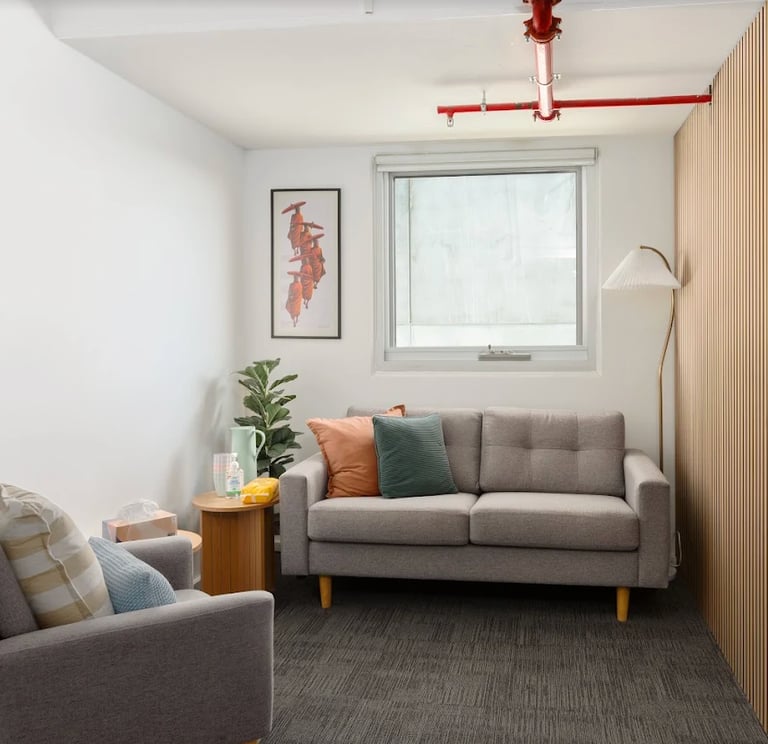
Calm Centre Therapy is based in Footscray in Melbourne’s inner west, and offers both in-person and online therapy across Australia.
Our footscray location is easily reached from nearby suburbs including:
Seddon
Yarraville
West Footscray
Braybrook
Kensington
Questions or ready to book an appointment?
If you are feeling burned out, therapy can offer a place to pause, make sense of what has been happening and map out a way to recovery.
You are welcome to get in touch with any questions you might have, or to request an appointment


Lua Bruckhoff (She/Her)| Accredited Mental Health Social Worker
admin@calmcentretherapy.com.au
Calm Centre Therapy is situated on Wurundjeri land which was never ceded and will always be Aboriginal Land. I acknowledge the ongoing connection the Wurundjeri people of the Kulin Nation to land, waterways and community and I extend my respect and acknowledgement to Elders past and present.